


sustainable meeting location Brabant
Company History
EIGENTIJDSERF, as we know the site and the building today, has an extensive and narrative past. Here we tell the story of our company history and why we now bear the name EIGENTIJDSERF.
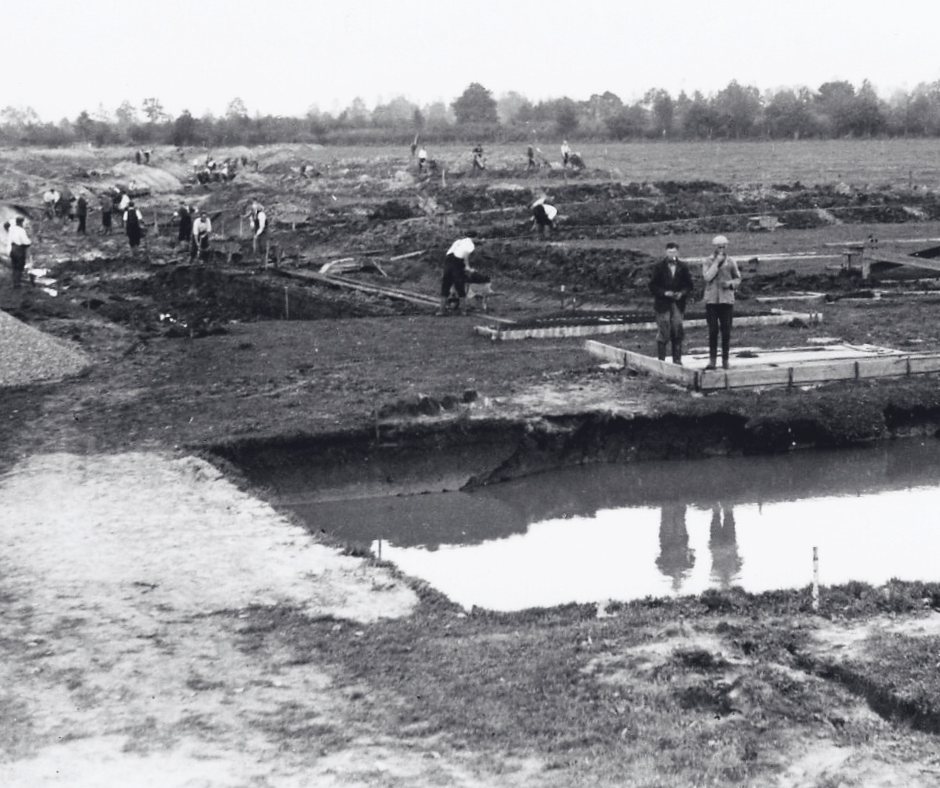
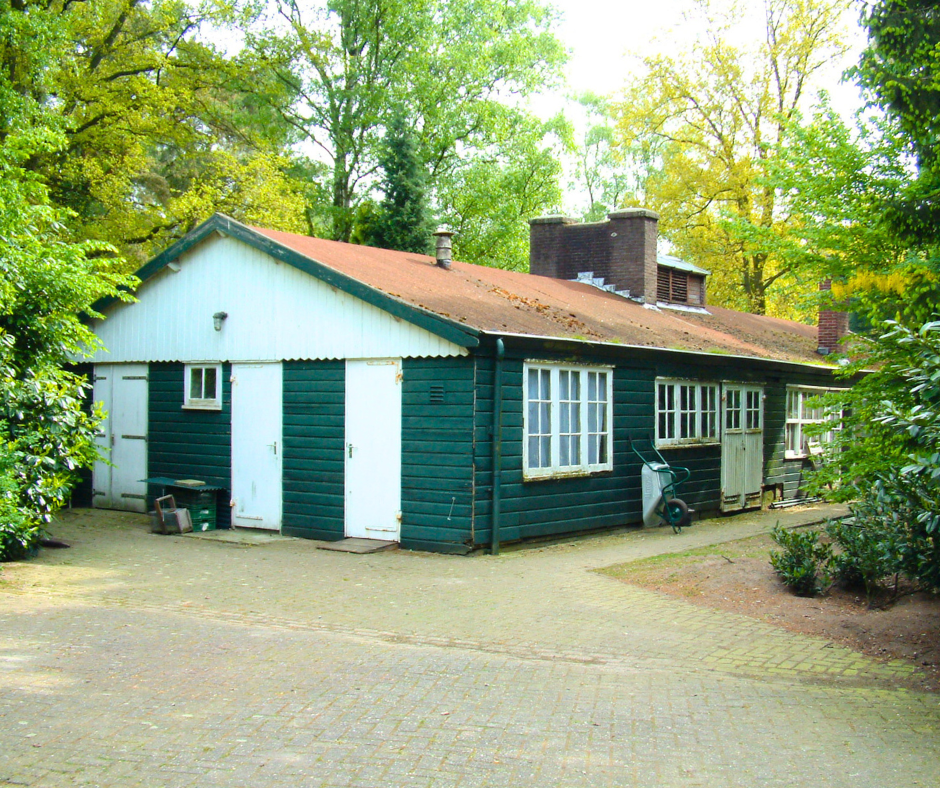
In the 1930s, wooden barracks were built on the grounds of EIGENTIJDSERF as accommodation for unemployed people. They were required to work on projects in the surrounding area, such as land reclamation and land consolidation, as part of the Work Relief Program. The camp was called Camp Baarschot, located in the then municipality of Oost-, West-, and Middelbeers. Each residential barrack accommodated 48 people (8 per 3 x 5 meter room), and there was a barrack for the manager, who also served as the cook, with a kitchen and technical room.
World War II
During the Second World War, unemployed men were held in Camp Baarschot from 1941 onwards. They were forced to perform heavy physical labor in the region, which was known at the time as Werkverruiming (Work Expansion). The camp also served as a test camp for a time. Jewish and non-Jewish men were forcibly detained there by the occupying forces.
On October 2 and 3, 1942, all Jews residing in labor camps throughout the Netherlands were rounded up and taken to Westerbork. From there, they were transported to concentration camps in Germany and Poland, which also applied to the Jews in this camp.
From late 1943, young men between the ages of 18 and 25 were housed here. They had to fulfill their compulsory labor as part of the Dutch Labor Service, modeled after the German Reichsarbeitsdienst. In addition to heavy physical labor, they also had to practice with a shovel and attend lessons that supported the National Socialist ideal.
After the liberation
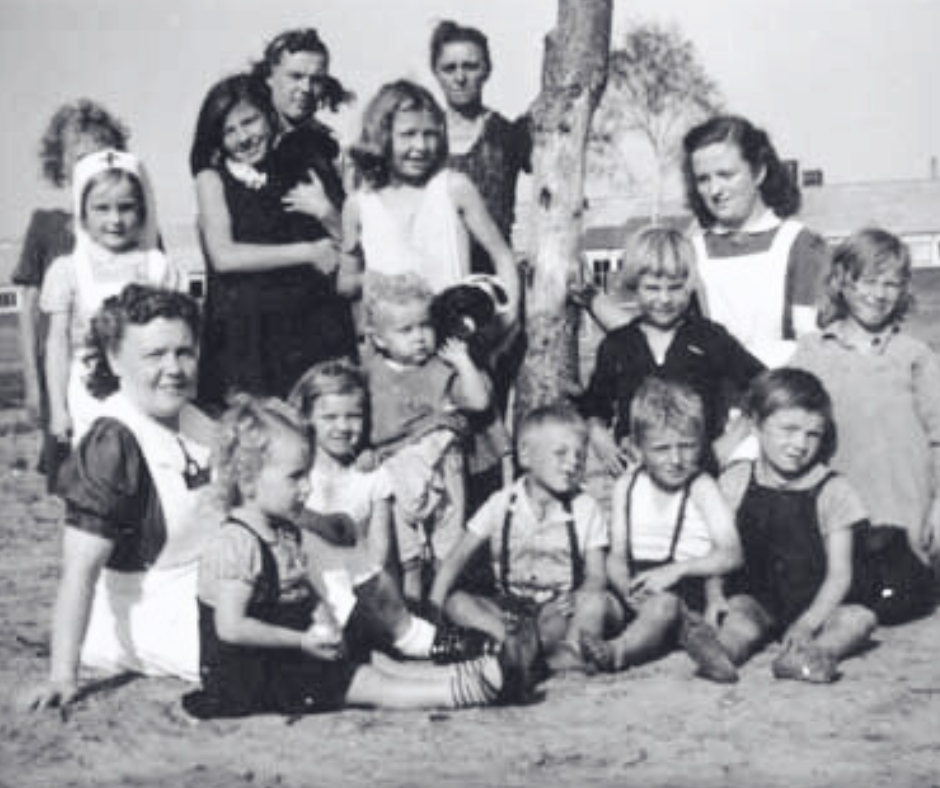
This part of Brabant was liberated on October 3, 1944. From that moment until 1948, the camp served as a place for people who had to leave unsafe areas or where houses were no longer habitable. The largest barracks was converted into a space where people gathered, celebrated parties, and held religious services. This barracks was also used as an altar for Roman Catholic celebrations. Later, in 1948, the Het Vierde Prinsenkind Foundation transformed the camp into a holiday resort for Catholic children. In the summer of that year, 150 children from West Brabant stayed here.
The fifties
In the 1950s, there was still widespread unemployment in the Netherlands after the war. The Public Works Department (DUW) continued compulsory labor for the unemployed. Heidemij and Grontmij supplied projects, including Camp Baarschot. In March 1951, workers there staged a major nationwide strike to avoid having to return to the camp in the evening, so they could instead travel home by bus. In February 1953, families affected by the North Sea flood disaster stayed temporarily in the camp, awaiting the reconstruction of their homes.
Indonesian families
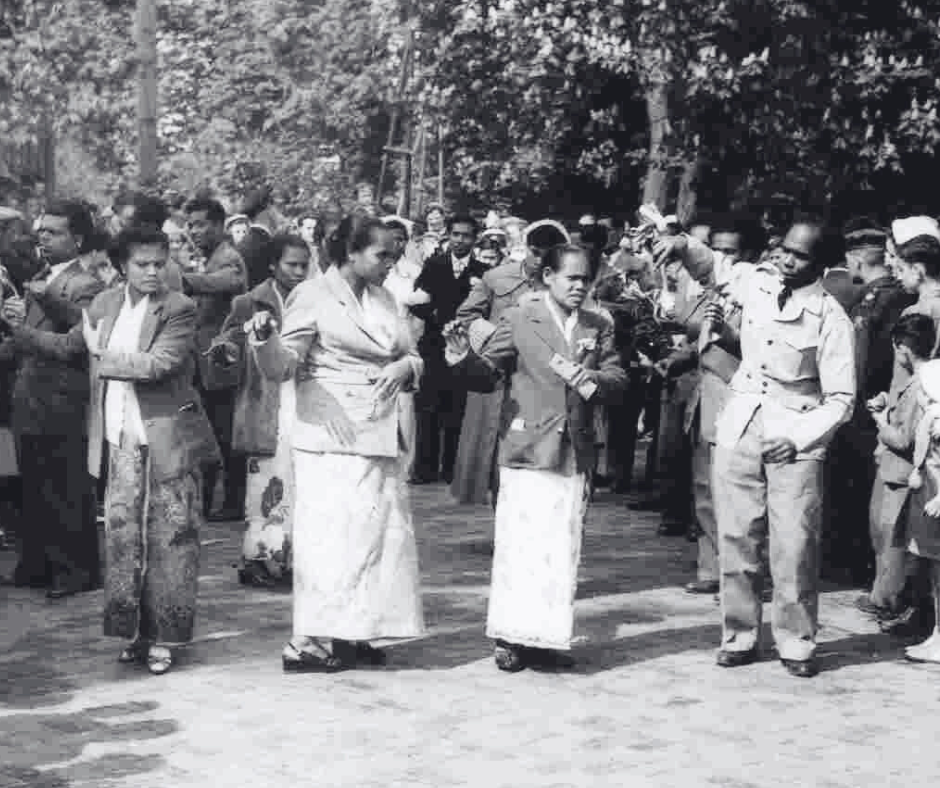
From October 1955 to the summer of 1959, Indonesian families from the South Moluccan Kei Islands lived in the camp. They had been forced to come to the Netherlands following the declaration of independence of the Republic of Indonesia. In 1958, 166 people from the Kei Islands were staying in the camp. Their children attended school in the camp, in the canteen and church barracks. The young people participated in scouting in Middelbeers and played football against the youth teams of RKDSV in Diessen. Weddings were celebrated, parties were held, and First Communions took place, just like in the villages in Brabant. The Kei Islands were eventually well accepted by the population of the surrounding villages, after a cautious start.
The Joannes Bosco Foundation
In 1959, the municipality of Oost-, West- and Middelbeers purchased a plot of land from the government. They leased it to the Joannes Bosco Foundation, which used it as a holiday resort for children aged 7 to 17, named "De Spreeuwel". They renovated old buildings and demolished a few. Spanish guest workers employed at NV Volt in Tilburg also stayed there.
Proceeds for (youth) groups
In 1971, the foundation purchased the site from the municipality and carried out several major renovations. The renovated accommodation was rented out to various (youth) groups. The proceeds went to charities focused on the development of young people. Until 2002, one of the old barracks remained in use as a caretaker's residence. The inventory from the demolished caretaker's barracks was moved to the Open Air Museum in Arnhem. There, a barrack from Lage Mierde was reconstructed and furnished with items from Baarschot. In the 1970s, two sleeping wings and a conference hall were built during the first renovation. More renovations followed in the 1980s and 1990s, allowing for more guests to stay. The buildings were made suitable for a broader audience, not only youth organizations and schools, but also other groups wishing to reflect, train, learn, hold conferences, and hold meetings. Everything was done on a commercial basis without subsidies, with the aim of generating revenue for the development of young people in disadvantaged positions.

CONTEMPORARY SERGE
In 2000, the mayor of the municipality of Oirschot De Beerzen, Ruud Severijns, officially changed the name of 'De Spreeuwel' to 'Conferentiehotel De Spreeuwelse Heide'. Around 2014, when there was less demand for meetings, we wondered how we could maintain the vibrancy of this place. How could we add value, and in what way? We looked at what was around us. That is when we decided to change the name to EIGENTIJDSERF, a place to stay in the power of nature.
Joannes Bosco Foundation
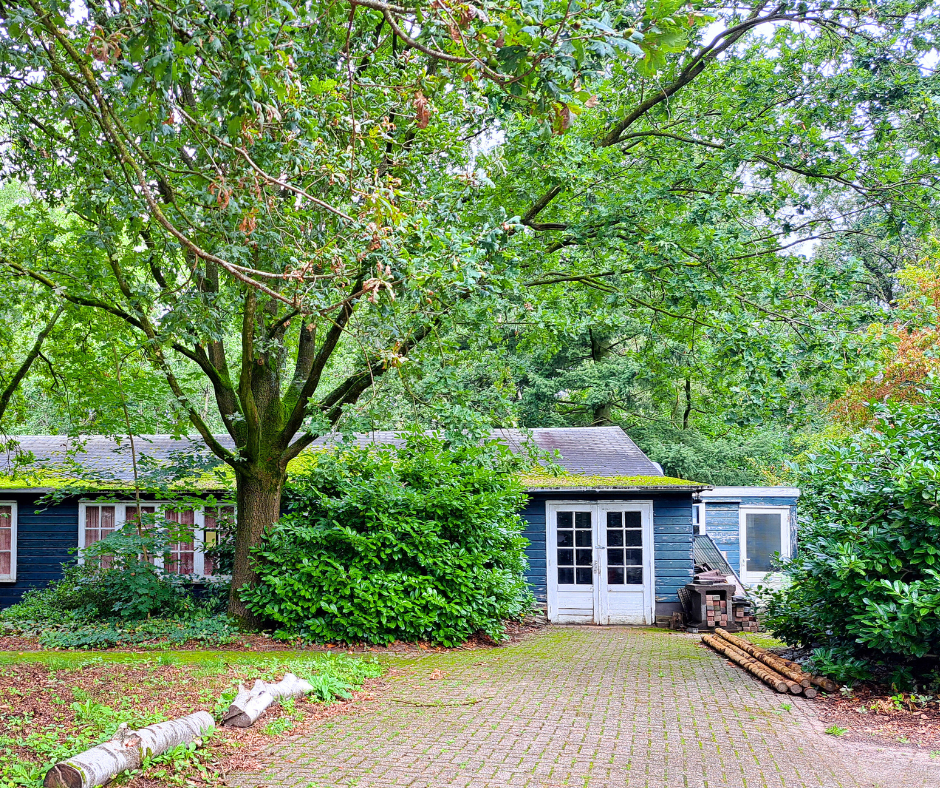
The proceeds from EIGENTIJDSERF still go to the Joannes Bosco Foundation, which is dedicated to charitable causes, primarily focused on the development of young people in Brabant who could use a little help. One barracks has been preserved on the site (the former canteen/church/event hall), which is now used as storage space. The board of the Joannes Bosco Foundation has plans to preserve these barracks and restore them to their original state as much as possible.